The Toolkit for Digital Liberation: Why It Matters
In 2023, a pregnant Black mother in Detroit was arrested in front of her children after a facial-recognition system falsely identified her as a carjacking suspect. Over 300 Amazon warehouse workers in Baltimore were fired by an automated productivity algorithm. During the 2020 Black Lives Matter protests, Black activists watched their posts get removed and hidden across social media platforms in real time.
Different sectors. Different systems. Same pattern: biased technology targeting Black people.
This is why we built The Toolkit for Digital Liberation.
Where It Came From
The Toolkit was create for, "Muted on Arrival: Suppression, Platforms, and the Black Creator Economy" panel at Black Week NYC in October 2025. The concept was born out of the panel’s contributors including writer, Chereese Sheen and supported by Color of Change.
We didn't create this in a vacuum. We created it because every Black creator, entrepreneur, and professional we know has a story about being suppressed, shadow banned, demonetized, or digitally erased — and most of them thought they were the only one.
They're not.
What We're Actually Up Against
In today's creator economy, content is expression, currency, and awareness. Black creators invest hours, dollars, and emotional labor building audiences and businesses on platforms they don't control — only to face sudden demonetization, shadow bans, or policy reversals that erase their progress with no warning and no recourse.
The algorithms that govern visibility on these platforms are not neutral. They are not "just math." They reflect the biases of the data they were trained on and the priorities of the companies that built them. And when those systems fail, they fail on us first.
From AI hiring tools that screen out African names before a human ever sees the application, to content algorithms that suppress Black faces, to the government using AI-altered images as propaganda. The harm spans hiring, housing, healthcare, education, criminal justice, and the digital spaces where we build community and livelihood.
These things keep happening because the right people are not at the table. Or if they are, they are not empowered in the decisions being made.
Three Pillars for Fighting Back
The Toolkit for Digital Liberation is organized around three pillars — each designed to meet people where they are and give them something they can do right now.
1. Individual Power and Preservation
This is about protecting yourself before the next algorithm change, the next shadow ban, the next policy reversal hits. The Toolkit walks creators and entrepreneurs through concrete steps: diversify across multiple platforms so no single company can silence you overnight. Monetize directly through tools like Patreon, Substack, or Kajabi — because the best way to beat algorithmic suppression is to be independent of the algorithm. Build your own audience through email lists and newsletters that no platform can censor. And back up everything using the 3-2-1 rule: three copies of your content, two different storage types, one offsite. If they delete you tomorrow, your work still exists.
2. Collective Community Action
Individual survival is necessary, but it's not enough. This pillar is about moving into a collective rhythm that algorithms struggle to silence.
The Toolkit introduces a "Recognize, Repost, Rebuild" framework — making the conscious choice to amplify instead of scrolling past. Algorithms reward early and consistent engagement. When communities coordinate that engagement intentionally, they can disrupt the low-visibility cycles that suppress powerful work.
The Toolkit also lays out how to run Coordinated Engagement Campaigns — choosing one piece of content per week to collectively boost through likes, shares, and comments. That coordinated surge signals value to the algorithm and increases the chances of wider distribution. Even micro or suppressed creators can break through when a community organizes behind them.
This isn't theory. Right now on YouTube, creators with large platforms are using exactly this approach — amplifying smaller Black creators whose content was being buried. It works. Community is the algorithm workaround.
The Toolkit also encourages building private networks on encrypted platforms like Signal and Discord — spaces where content reaches members directly, bypassing ranking systems and shadow bans entirely.
3. Advocacy and Accountability
Algorithmic bias isn't just a social media problem. It shapes access to housing, hiring, healthcare, education, and outcomes in the criminal justice system. That makes it a civil rights issue.
The Toolkit provides a step-by-step guide to identifying, documenting, and reporting patterns of algorithmic bias — not just flagging a single piece of content, but building a case. It directs people to the right regulators: the FTC for consumer AI issues, the EEOC for employment discrimination, the CFPB for financial product bias. In New York City, Local Law 144 already requires auditing of AI hiring tools. The legislative tools exist — we need people using them.
The Toolkit also connects people to trusted petition platforms and advocacy organizations — including Color of Change, which has extensive experience documenting and elevating issues of algorithmic suppression. You don't need to be a professional organizer to contribute. Signing a petition, submitting documentation, sharing your experience for public testimony — each act transforms individual frustration into collective power.
Why This Matters Right Now
We are living through a moment where algorithmic harm is accelerating — and the people in positions to regulate it are not prioritizing our protection. Black women are at nearly 8% unemployment while AI hiring screeners encode the same naming biases that have followed us for generations. Creators who criticize platforms watch their reach evaporate. The government itself is using AI to alter images of Black people.
The Toolkit for Digital Liberation exists because platforms will not protect us. It gives individuals the tools to protect themselves, communities the strategies to amplify each other, and everyone a roadmap to demand accountability from the systems that shape our digital lives.
Protect your work. Amplify your community. Demand accountability.
The full Toolkit — including recommended platforms, resources, reports, grants, and guides — is available through Color of Change.
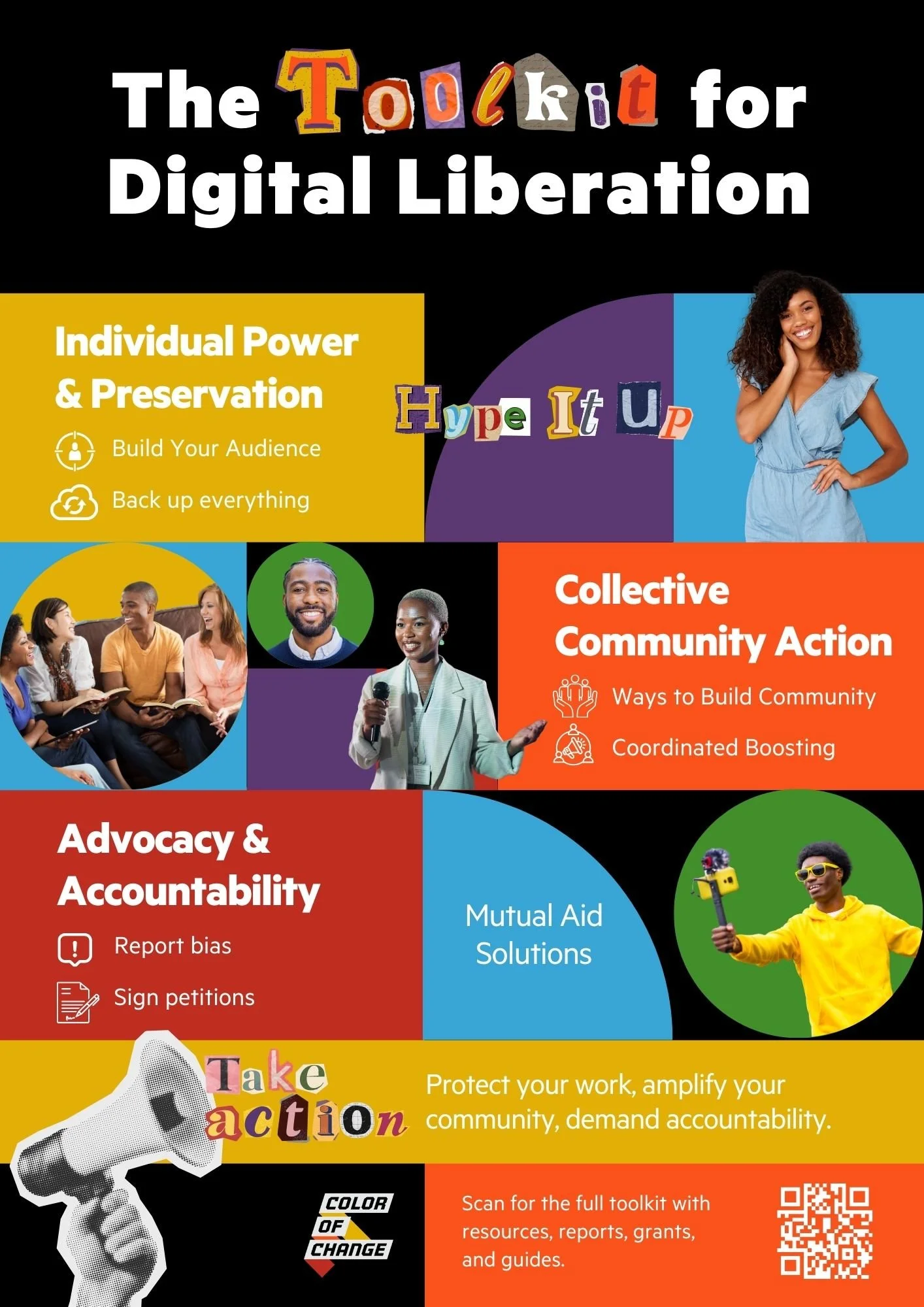
The Digital Tool Kit One Pager
The Toolkit for Digital Liberation was created through the BLACKWEEK "Muted on Arrival"panel. Written by Chereese Sheen and the panel contributors, in partnership with Color of Change.