The Collapse of the “Girl Boss” Era and Why Women Are No Longer Buying the Fantasy
For nearly fifteen years, the “girl boss” era dominated modern professional culture.
Women were told they could have everything if they optimized correctly. The formula varied slightly depending on the influencer, executive, podcast host, or celebrity delivering the message, but the underlying promise remained remarkably consistent: work hard enough, brand yourself strategically enough, become emotionally intelligent enough, network enough, heal enough, and eventually success would arrive.
The language around this promise became its own economy.
Empowerment.
Leadership.
Visibility.
Balance.
Ambition.
Wellness.
Soft life.
Productivity.
Manifestation.
Entire industries emerged around teaching women how to survive corporate culture while simultaneously performing mastery over it. Leadership conferences, business books, networking retreats, women’s summits, coaching ecosystems, self-help podcasts, LinkedIn branding culture, and “having it all” narratives all reinforced the same core idea: fulfillment was achievable through better calibration of selfhood.
But in 2026, that fantasy is visibly collapsing.
A recent New York Times opinion piece by Tressie McMillan Cottom captured this cultural rupture sharply while examining backlash surrounding influencers and executives encouraging women to aggressively embrace artificial intelligence.
The reaction online was immediate and intense.
Many women did not hear empowerment in these messages. They heard threat.
And the distinction matters.
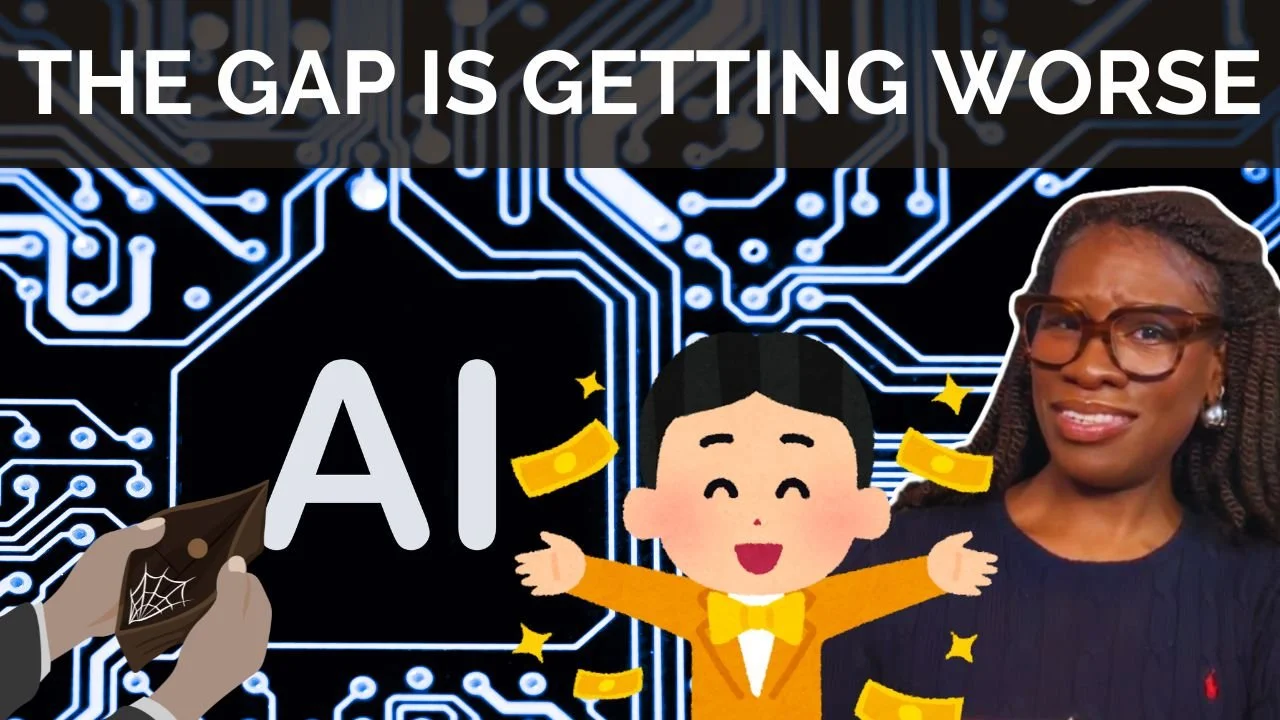
Because AI is not arriving during a stable economic period where workers feel secure enough to experiment comfortably with emerging technologies. It is arriving during a moment defined by layoffs, wage stagnation, burnout, housing instability, healthcare anxiety, shrinking labor protections, and widening wealth inequality.
Women are not rejecting technology itself. Many are already integrating AI into their workflows daily. What they are rejecting is the emotional framing surrounding it.
Specifically, they are rejecting the idea that adaptation alone will protect them inside systems that already feel increasingly unstable.
This frustration becomes more understandable once viewed against the larger history of women’s labor over the past several decades.
Women dramatically increased educational attainment rates. Women entered professional sectors at historic levels. Women delayed childbearing to pursue careers. Women built businesses, side hustles, personal brands, and online platforms. Women absorbed both paid labor and disproportionate unpaid caregiving responsibilities simultaneously.
And despite all of this effort, many women now find themselves economically exhausted rather than empowered.
That exhaustion is structural, not individual.
The labor market many women entered no longer resembles the one they were originally trained to succeed within. Corporate loyalty has weakened. Career ladders have flattened. Home ownership has become inaccessible for many younger workers. Retirement security has deteriorated. Public sector jobs, historically important pathways into the middle class for Black women especially, have faced repeated cuts and instability.
At the same time, artificial intelligence is being introduced not merely as a productivity tool, but increasingly as a labor restructuring mechanism.
This is where the backlash toward influencer AI messaging becomes culturally revealing.
Many women are no longer interested in being told how to optimize themselves around systems that appear fundamentally indifferent to their stability. Productivity language that may have once sounded aspirational now often sounds emotionally detached from material reality.
The “girl boss” era depended heavily on the belief that individual ambition could overcome structural inequality through enough discipline, branding, resilience, and strategic positioning.
But many women are now openly questioning whether the system itself was ever designed to deliver what was promised.
That shift is profound.
And race complicates it further.
Black women, in particular, occupy a unique position within these conversations because they have long been expected to overperform professionally while receiving less institutional protection economically. Black women are among the most educated demographics in the United States and have consistently demonstrated extraordinary labor force participation rates, entrepreneurial activity, and caregiving contributions.
Yet they also remain disproportionately vulnerable to economic instability, public sector cuts, healthcare inequities, caregiving burdens, and workplace discrimination.
The article references the sharp reduction in Black women’s federal employment participation following public sector cuts tied to DOGE-related restructuring efforts. That detail matters because federal employment historically represented one of the few relatively stable middle-class pathways available to Black workers at scale.
So when conversations about AI adoption ignore labor displacement realities entirely, many workers experience those conversations as disconnected at best and cruel at worst.
What women increasingly seem to want now is not more empowerment branding.
They want honesty.
Honesty about labor precarity.
Honesty about automation.
Honesty about wealth concentration.
Honesty about burnout.
Honesty about caregiving.
Honesty about the emotional cost of survival inside economies built around perpetual optimization.
The internet’s reaction to this latest wave of “embrace AI” messaging reveals something larger than frustration with influencers. It reveals a broader cultural exhaustion with aspiration narratives that no longer align with lived experience.
Women are not rejecting ambition.
They are rejecting exhaustion disguised as liberation.